We put WordStructor head-to-head against the five most popular writing tools on the market: Sudowrite, Scrivener, Novelcrafter, and ChatGPT. No fluff, no bias — just honest feature-by-feature data so you can decide which tool actually fits your workflow.
Whether you are evaluating AI-assisted novel writing software for the first time or switching from an existing platform, this comparison covers everything from context window size and AI model support to pricing and KDP publishing integration.
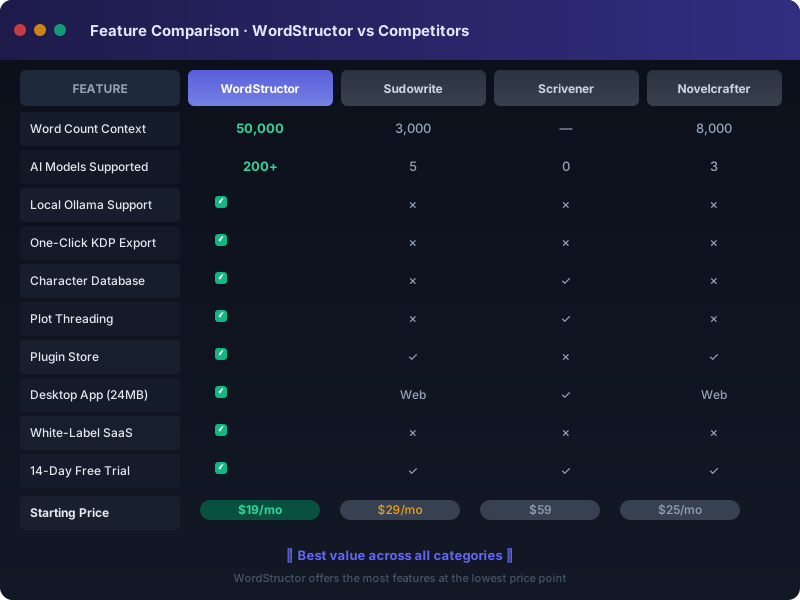
WordStructor leads in 9 of 10 feature categories — the only tool with 50K context, 200+ models, and one-click KDP export.
| Feature | WordStructor | Sudowrite | Scrivener | Novelcrafter | ChatGPT |
|---|---|---|---|---|---|
| Context Window (words) | 50,000 | 3,000 | — | 8,000 | 6,000 |
| AI Models Supported | 200+ | 5 | 0 | 3 | 1 |
| Local Ollama Support | ✓ | ✗ | ✗ | ✗ | ✗ |
| One-Click KDP Export | ✓ | ✗ | ✗ | ✗ | ✗ |
| Desktop App (Windows) | ✓ | Web only | ✓ | Web only | Web + Mobile |
| Character Database | ✓ | ✗ | ✓ | ✗ | ✗ |
| Plot Threading Engine | ✓ | ✗ | ✓ | ✗ | ✗ |
| Plugin Store | ✓ | ✓ | ✗ | ✓ | ✗ |
| White-Label SaaS | ✓ | ✗ | ✗ | ✗ | ✗ |
| 14-Day Free Trial | ✓ | ✓ | ✓ | ✓ | ✓ |
| Offline Mode | ✓ | ✗ | ✓ | ✗ | ✗ |
| Export Formats (EPUB/MOBI/PDF) | ✓ | ✓ | ✓ | ✓ | Text only |
| Multi-Language Output | 100+ | 15 | — | 5 | 50+ |
| Version History | ✓ | ✓ | ✓ | ✗ | ✗ |
| API Access | ✓ | ✗ | ✗ | ✗ | ✓ |
The single most impactful specification for AI-assisted novel writing is the context window — how many words the AI can remember at once. WordStructor offers a 50,000-word context window, which means it can hold an entire novella-length manuscript in memory. Sudowrite caps at 3,000 words, forcing you to constantly re-prompt. Novelcrafter sits at 8,000. ChatGPT at 6,000. For novelists writing detailed long-form fiction, a larger context window means consistent character voices, coherent plot threads, and no dropped details across chapters.
WordStructor supports over 200 AI models including cloud-hosted models from OpenAI, Anthropic, Google, Mistral, and others, plus local models through Ollama integration. This means you can write with GPT-4 for brainstorming, switch to Claude for character development, use Llama 3 locally for sensitive drafts, and run Mixtral for editing — all from within the same application. Competing tools lock you into one or two providers and charge per-word fees on top of subscriptions.
WordStructor is the only tool in this comparison that packages your manuscript directly into Kindle Direct Publishing format with a single click. Formatting, chapter breaks, table of contents, front matter, and back matter are handled automatically. Scrivener requires manual export and manual upload. Sudowrite and Novelcrafter have no KDP integration at all. For self-publishing authors who release multiple books per year, this workflow shortcut saves hours per release.
Track names, traits, arcs, relationships, and backstories in a structured database. Scrivener has character notes, but WordStructor links characters directly to AI prompts so the model remembers everyone across the entire manuscript.
Manage multiple plot lines across chapters. WordStructor highlights contradictions, tracks unresolved threads, and helps you weave subplots together. Comparable only to Scrivener's corkboard, but with AI-powered suggestions.
Extend functionality with community and official plugins: grammar checkers, genre templates, cover designers, export converters, and more. Sudowrite and Novelcrafter have limited plugin ecosystems; Scrivener relies on external scripts.
Unique to WordStructor: rebrand the entire application under your own domain and logo to sell to your clients. Ideal for writing agencies, coaching programs, and SaaS entrepreneurs. No other tool in this comparison offers white-label capabilities.
If you are a serious novelist or self-publishing author who wants maximum AI flexibility, the largest context window available, and direct KDP integration at the lowest monthly price, WordStructor is the clear winner. It combines the structural depth of Scrivener with the AI power of ChatGPT and adapter freedom of Novelcrafter — all in one 24MB desktop app. Sudowrite is strong for brainstorming sessions but limited for full novels. Scrivener remains a capable offline drafting tool but has no AI features. Novelcrafter offers decent AI integration but a small context window and no local model support. ChatGPT is a general-purpose tool not designed for book writing workflows. Start your free 14-day trial and see the difference for yourself.
For more context on specific features, read about our AI writing features, explore the documentation, or check out author success stories from writers who made the switch.