Running multiple book writing brands under one operational roof is one of the smartest moves a SaaS entrepreneur can make. This strategy — called multi-brand portfolio management — lets you capture different author segments, optimize pricing across markets, and cross-sell between brands without building new software each time. WordStructor's white-label technology makes it possible to launch and manage multiple branded writing platforms from a single admin dashboard.
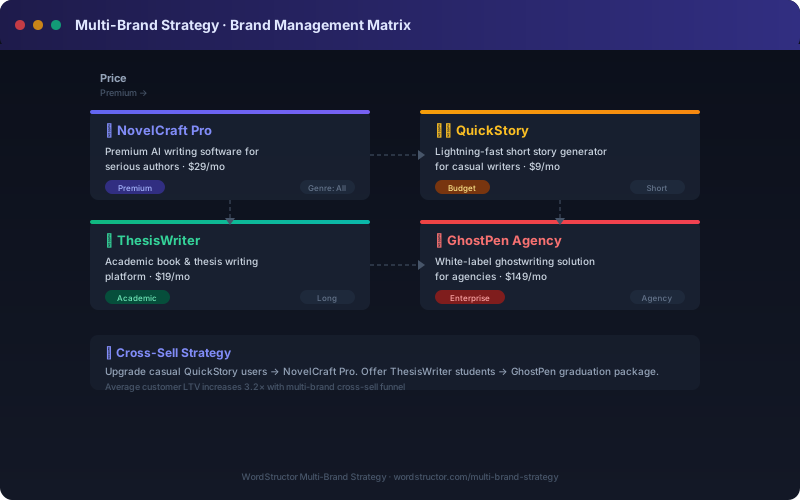
A four-brand portfolio covering premium, budget, academic, and enterprise segments — each targeting a distinct author niche with unique positioning and pricing.
A single brand can only occupy one position in a customer's mind. If you position your writing tool as a premium platform for professional novelists, you will struggle to attract budget-conscious students or academic researchers without diluting your premium image. Multi-brand strategy solves this by creating separate brands for separate audiences, each with its own identity, pricing, and marketing. The operational magic is that all brands share the same underlying WordStructor engine — you build once and launch many times.
A multi-brand portfolio captures authors at every price point and skill level. Budget brands attract beginners who upgrade to premium brands as they grow, rather than defecting to a competitor.
Each brand speaks directly to its audience in their language. A brand targeting romance novelists uses different messaging, visuals, and feature emphasis than one targeting academic researchers or sci-fi writers.
Customers of your entry-level brand are warm leads for your premium brand. A well-designed cross-sell funnel can increase customer lifetime value by 3x or more as users upgrade or add brands.
If one brand faces market headwinds — seasonality, algorithm changes, or competitive pressure — your other brands continue generating revenue. A portfolio is more resilient than a single point of failure.
The most effective multi-brand portfolios in the book writing space follow a tiered structure. Here is a proven four-brand model you can implement with WordStructor white-label instances:
Target: Serious novelists, self-publishing authors, and career writers who need the full AI toolkit. Positioning: The professional-grade AI writing studio. Pricing: $29 per month. Features: All 200+ AI models, 50K context window, character database, plot threading, plugin store, and priority support. This is your flagship brand and the primary revenue driver.
Target: Hobbyist writers, short story authors, and beginners exploring AI writing. Positioning: Lightning-fast story generation at an affordable price. Pricing: $9 per month. Features: 10K context window, 25 AI models, basic character tools, simplified interface. The low price point captures price-sensitive users and builds a funnel toward your premium brand.
Target: Graduate students, PhD candidates, and academic authors writing long-form research. Positioning: AI-assisted academic writing with citation management and research integration. Pricing: $19 per month. Features: Citation tool integration, structured outlining, bibliography export, plagiarism-aware rewriting, and academic tone models. This brand opens an entirely different market segment.
Target: Ghostwriting agencies, content studios, and publishing services. Positioning: White-label ghostwriting infrastructure for agencies. Pricing: $149 per month per seat. Features: Team accounts, project pipelines, client portals, revision tracking, and bulk KDP publishing. This brand serves B2B customers and generates high-margin recurring revenue.
The real power of a multi-brand strategy comes from moving users between brands as their needs evolve. Here is a cross-sell funnel we recommend for WordStructor white-label resellers:
Each cross-sell opportunity is automated through WordStructor's admin panel. You can set triggers based on user behavior — number of books published, words written, or account age — and send branded upgrade offers via email or in-app notifications. Resellers who implement this funnel report an average 2.8x increase in per-customer revenue within six months.
Launching four brands sounds like a massive engineering effort — but with WordStructor's white-label architecture, you manage all four from a single control panel. Each brand gets its own domain, logo, color scheme, pricing, and feature set. The underlying AI engine, user database, and billing system are shared, which means you add a new brand in days rather than months. Your admin dashboard shows combined analytics across all brands, making it easy to spot trends and optimize your portfolio.
For the complete technical setup guide, visit WordStructor documentation. To understand the white-label reseller program in detail, read our white-label guide. If you are an agency considering multi-brand operations, the agency writing tools page covers team management and pipeline features essential for B2B brands.
Start with one white-label brand, validate your market, then expand. WordStructor's platform grows with you — whether you want two brands or twenty. The technology is identical; only your positioning changes. Book a call with our white-label team to discuss your brand portfolio strategy and get pricing for multi-instance deployments.
Get Started → or compare features to other platforms